Isolate and manage client environments without operational overhead
Software development agencies run dozens of client environments concurrently, each with distinct tech stacks, staging tiers, and billing requirements. You need hard boundaries: separate networks, isolated backups, and clear per-client cost tracking.
Why generic VM tagging and manual accounting fail at scale
Labeling virtual machines per client does not isolate network traffic or backup datastores. Shared infrastructure creates cross-tenant security risks, while tracking costs across multi-tenant servers turns client billing into a monthly spreadsheet headache.
The hostd project boundary model
client-a
| VMID | Name | CPU usage |
|---|---|---|
201 | db-1 | 18.2% of 4 CPUs |
202 | db-2 | 9.1% of 4 CPUs |
210 | app-1 | 4.3% of 2 CPUs |
Dedicated project isolation
Every client environment gets a dedicated project boundary, complete with its own private VLAN, compute instances, and backup datastore.
Granular team RBAC
Assign Superadmin, Admin, or Auditor roles to team members to strictly control who can modify production.
Isolated backup datastores
Every project maintains an independent, dedicated backup repository with its own schedule and retention policies.
Itemized per-project billing
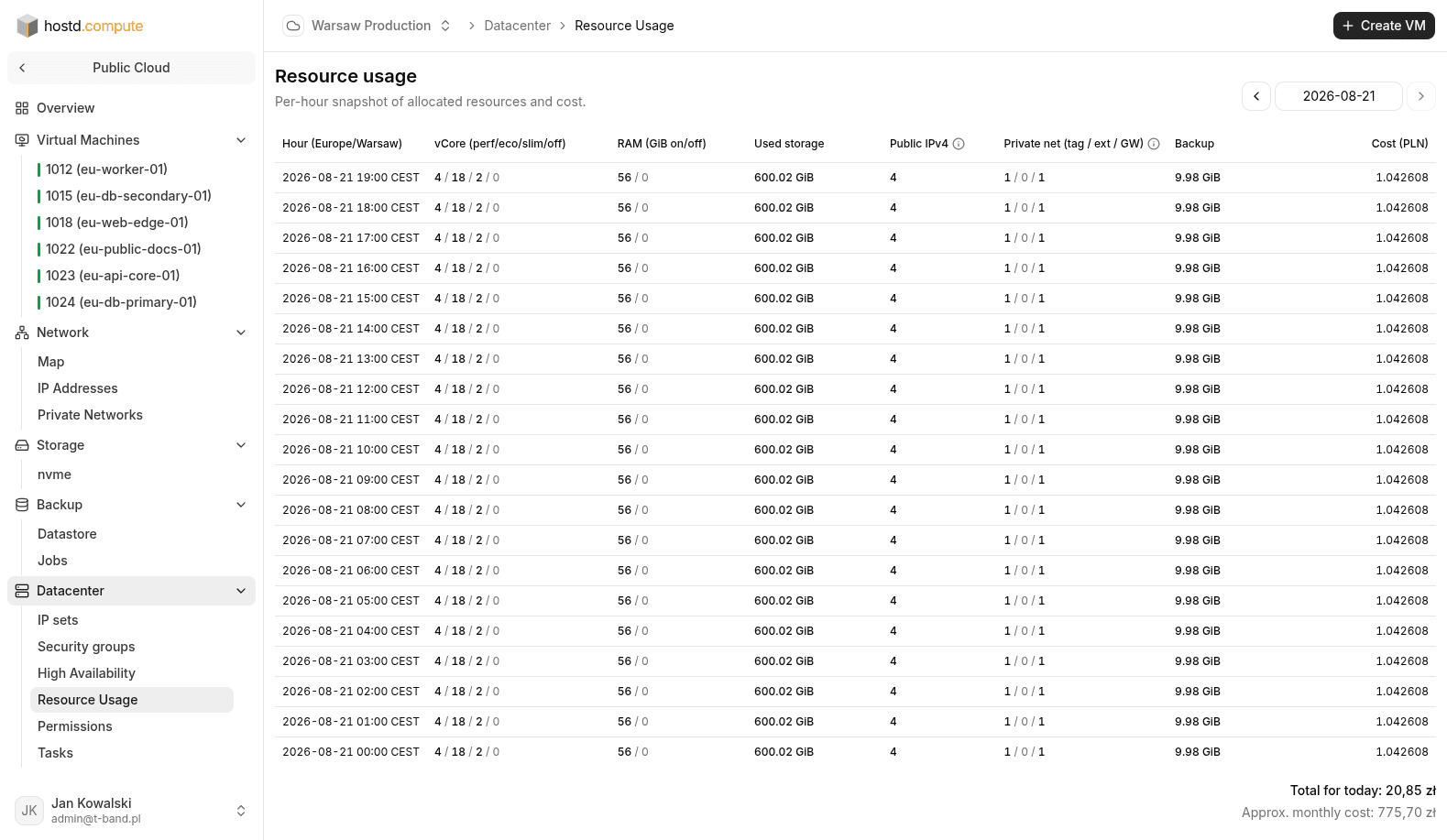
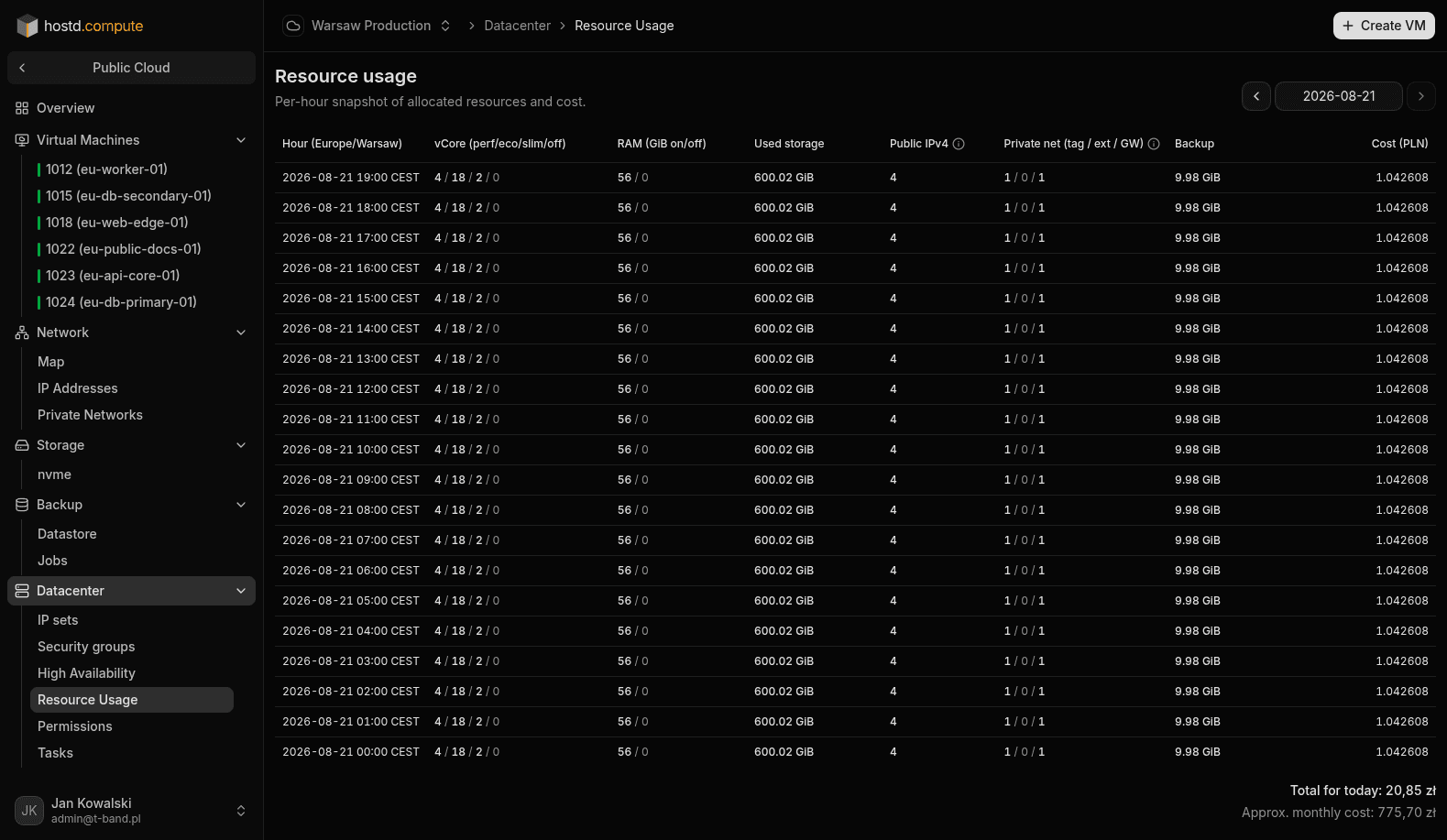
Resource usage and hourly costs are tracked per project, so re-billing each client is straightforward.
Zero compute cost for inactive staging
Spin down developer staging environments outside working hours to immediately pause vCPU and RAM billing.
Client onboarding via AI agents & MCP
Connect AI assistants to our native MCP server to onboard new client environments, configure firewalls, and spawn staging VMs directly through IDE prompts.
Sample architecture: single client setup
- 2 vCPU Regular · 4 GiB RAM · 40 GiB NVMe
- 2 vCPU Regular · 8 GiB RAM · 80 GiB NVMe
- Private network · Cloud Gateway · Public IPv4
- Backups · 7 days · ~192 GiB
Maximum full-month cost cap with all resources active.